
Becoming a mother changes the brain in real, measurable ways. This transition, often called matrescence, is not just emotional or social. It is neurological, hormonal, and deeply adaptive.
When we understand what is happening in the maternal brain, the experience of brain fog, overwhelm, or identity shifts starts to make more sense. And when we pair that understanding with nature therapy for postpartum mental health, we begin to see a clear path for support.
The Maternal Brain Is Changing for a Reason
Research shows that during pregnancy and after childbirth, a woman’s brain undergoes significant structural remodeling. There is about a 5 percent decrease in gray matter volume, especially in areas related to empathy, social cognition, and interpreting emotional cues.
This is not a loss. It is a refinement process known as pruning.
The brain is becoming more efficient, strengthening the neural networks that support bonding and caregiving. These changes:
- Last at least 2 years postpartum, and can be detected up to 6 years later
- Are influenced by hormonal shifts, including decreases in estrogen and progesterone and increases in oxytocin
- Improve a mother’s ability to read her baby’s needs and respond quickly
What many call “mom brain” is not a decline in intelligence. It reflects neural reorganization, high cognitive demand, and sleep disruption.
Nature Therapy and the Maternal Brain
During matrescence, the brain is more sensitive and more plastic. This makes support especially important.
Nature therapy is one of the most effective, accessible ways to support mental health during pregnancy and postpartum.
Time in nature has been shown to:
- Reduce activity in the amygdala, the brain’s stress center
- Lower cortisol and physiological stress
- Improve mood and reduce symptoms of depression
- Support attention, focus, and emotional regulation
This matters because the maternal brain is already working hard to adapt. Nature helps regulate that process rather than adding to the load.
Nature Therapy During Pregnancy
Pregnancy involves rapid hormonal shifts and early brain changes. Many women feel both grounded and disoriented at the same time.
Spending time outside supports:
- Nervous system regulation
- Reduced stress reactivity
- A stronger sense of connection to the body
Simple practices can include walking, sitting outside, or placing a hand on the belly while breathing fresh air.
Nature Therapy for Postpartum mental health
The postpartum period brings intense demands. Sleep deprivation, identity shifts, and constant caregiving can increase stress and emotional sensitivity.
The amygdala often becomes more reactive during this time. Nature helps regulate that response.
Research shows that walking in green spaces can decrease amygdala activity. This directly supports stress reduction and emotional balance.
Postpartum nature therapy can look like:
- Walking with a stroller on a tree-lined path
- Feeding a baby outside
- Stepping outdoors between naps
These small moments support a brain that is actively rewiring.
Nature exposure is also linked to lower rates of postpartum depression and improved overall mental health.
Long-Term Brain Changes and Ongoing Support
Some brain regions may partially recover in volume around six months postpartum. However, the overall remodeling of the maternal brain continues for years.
Motherhood creates lasting changes.
Nature therapy supports this long-term adaptation by:
- Creating space for reflection
- Supporting emotional processing
- Promoting consistent nervous system regulation
Ask Me How I Know
Because I did not just study this. I lived it.
In early labor, I was hiking in the woods, moving with my body.
During transition, I looked out a window watching the sunset, focusing on something steady and constant.
In the early days of feeding, I spent as much time outside as I could.
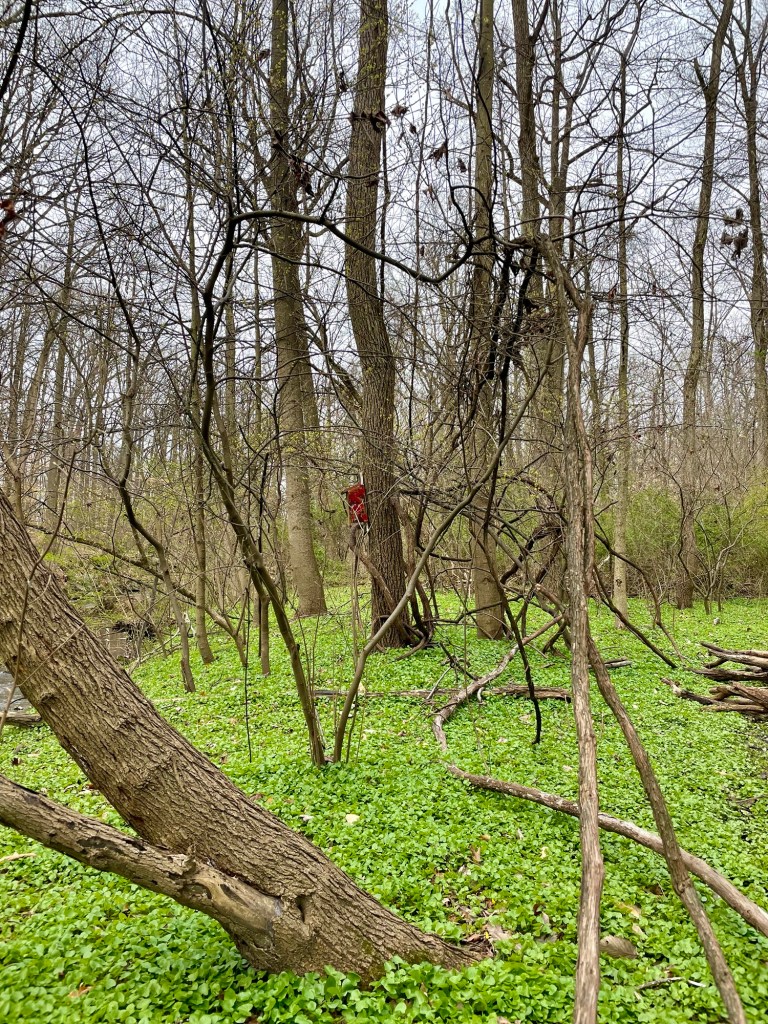
During difficult nap phases, I walked with my baby by the stream, letting the rhythm of water help regulate both of us.
Again and again, my body moved me toward nature.
Nature as a Practical Support for Moms
Nature therapy does not require extra time or complex planning.
It can be integrated into daily life:
- Feed your baby outside
- Take short walks instead of staying indoors
- Pause and notice the environment around you
These shifts support mental health without adding pressure.
Why I Created Flourish in Motherhood
This is why I created Flourish in Motherhood.
My work focuses on reintroducing mothers and families to nature as a core part of mental health care. Not as an extra, but as something essential.
There is real healing available when we build a relationship of reciprocity with the natural world. When we slow down enough to receive support from our environment, we also begin to reconnect with ourselves.
This matters during pregnancy, postpartum, and every stage of motherhood.
If you are looking for more individualized, in-depth support, I also offer one-on-one therapy where we can integrate nature, mindfulness, ACT, and somatic awareness in a way that is tailored to your experience.
Baltimore Nature Therapy for Moms
If you are in the Baltimore area and looking for postpartum support, you are invited to join us.
Flourish in Motherhood offers:
- Nature-based support for maternal mental health
- Practices grounded in mindfulness, ACT, and somatic awareness
- Space for connection with other mothers
Babies always welcome.
You do not need to be in a specific stage. You do not need to prepare anything.
If you are navigating pregnancy, postpartum, or early motherhood and want support through nature therapy, this space is here for you.
Final Thoughts
The maternal brain is not breaking down. It is adapting.
Nature therapy supports that adaptation by reducing stress, improving mood, and helping the nervous system regulate.
For mothers, this is not about doing more. It is about returning to something that has always been available.
And allowing it to support you through one of the most significant transitions of your life.